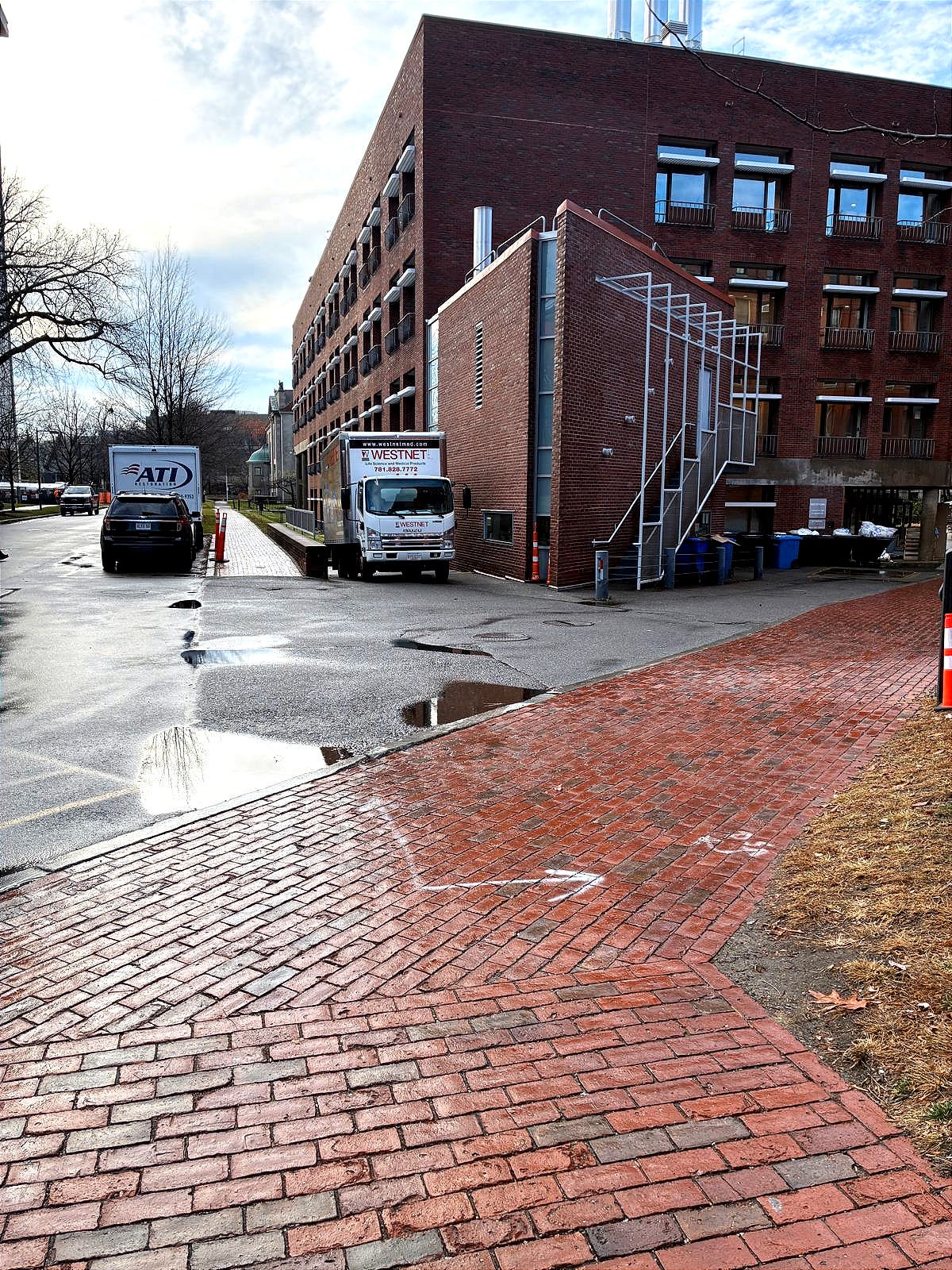
The Free Will Intersection, in Cambridge, Mass.
A philosophical scavenger hunt to locate an intersection from a 150-year old thought experiment

A Thought Experiment
Do you believe in free will? I confess that I’m always on the lookout for a good, persuasive argument for why our will is not subject to the inexorable laws of determinism. Unfortunately, I haven’t found one yet. But I keep looking.
William James promises one in The Dilemma of Determinism, an essay published in The Will to Believe and Other Essays in Popular Philosophy (1897). I encountered it in a recent collection of James’s writings edited by John Kaag and Jonathan van Belle for Princeton University Press.
It is a fascinating essay that, in some ways, anticipates multiverse theories of free will. It didn’t convince me that free will exists, but it catapulted me into full map-nerd mode, chasing a local intersection in Cambridge where James set his famous demonstration of free will.
Here’s James’s thought experiment:
What is meant by saying that my choice of which way to walk home after the lecture is ambiguous and matter of chance as far as the present moment is concerned? It means that both Divinity Avenue and Oxford Street are called; but that only one, and that one either one, shall be chosen. Now, I ask you seriously to suppose that this ambiguity of my choice is real; and then to make the impossible hypothesis that the choice is made twice over, and each time falls on a different street. In other words, imagine that I first walk through Divinity Avenue, and then imagine that the powers governing the universe annihilate ten minutes of time with all that it contained, and set me back at the door of this hall just as I was before the choice was made. Imagine then that, everything else being the same, I now make a different choice and traverse Oxford Street. You, as passive spectators, look on and see the two alternative universes,—one of them with me walking through Divinity Avenue in it, the other with the same me walking through Oxford Street. Now, if you are determinists you believe one of these universes to have been from eternity impossible: you believe it to have been impossible because of the intrinsic irrationality or accidentality somewhere involved in it. But looking outwardly at these universes, can you say which is the impossible and accidental one, and which the rational and necessary one? I doubt if the most iron-clad determinist among you could have the slightest glimmer of light on this point. In other words, either universe after the fact and once there would, to our means of observation and understanding, appear just as rational as the other. There would be absolutely no criterion by which we might judge one necessary and the other matter of chance. Suppose now we relieve the gods of their hypothetical task and assume my choice, once made, to be made forever. I go through Divinity Avenue for good and all. If, as good determinists, you now begin to affirm, what all good determinists punctually do affirm, that in the nature of things I couldn’t have gone through Oxford Street,—had I done so it would have been chance, irrationality, insanity, a horrid gap in nature,—I simply call your attention to this, that your affirmation is what the Germans call a Machtspruch, a mere conception fulminated as a dogma and based on no insight into details. Before my choice, either street seemed as natural to you as to me. Had I happened to take Oxford Street, Divinity Avenue would have figured in your philosophy as the gap in nature; and you would have so proclaimed it with the best deterministic conscience in the world.
James is trying to rehabilitate the idea of real alternatives. “Chance” (in his sense here) doesn’t mean “the world becomes chaotic or unintelligible.” It means there can be genuine branching points where more than one orderly future is possible.
But are there? Sure, either universe—the one where James goes down Divinity Avenue and the one where he goes down Oxford Street—appears perfectly rational. But is it because they are both possible or only because we do not know all that is going on in our brains? Maybe if we did, we would see why only one choice is inevitable.
Replicating the Experiment in the Original Place
But maybe I’m wrong. I’d love to be wrong, of course. I love the idea of free will as much as the next person. Maybe I’m truly under the spell of Machtspruch, as James thought. German words are always effective in philosophy.
I decided to check for myself. Maybe, I thought, if I could stand at the intersection of Divinity Avenue and Oxford Street, the ambiguity of the future would reveal itself. Maybe if I could replicate James’s own experiment, 150 years later, by placing myself in the original “branching point,” I could break the dogmatic spell of Machtspruch. So I went and looked for the place where it did (and could) happen.
One problem, though. Divinity Avenue and Oxford Street do not intersect.
Two Parallel Streets
Oxford Street and Divinity Avenue run parallel to each other and are connected to the south by Kirkland Street. You can walk down Kirkland, with Oxford behind you, towards Divinity Avenue, and this is roughly what you see today, in November 2025:
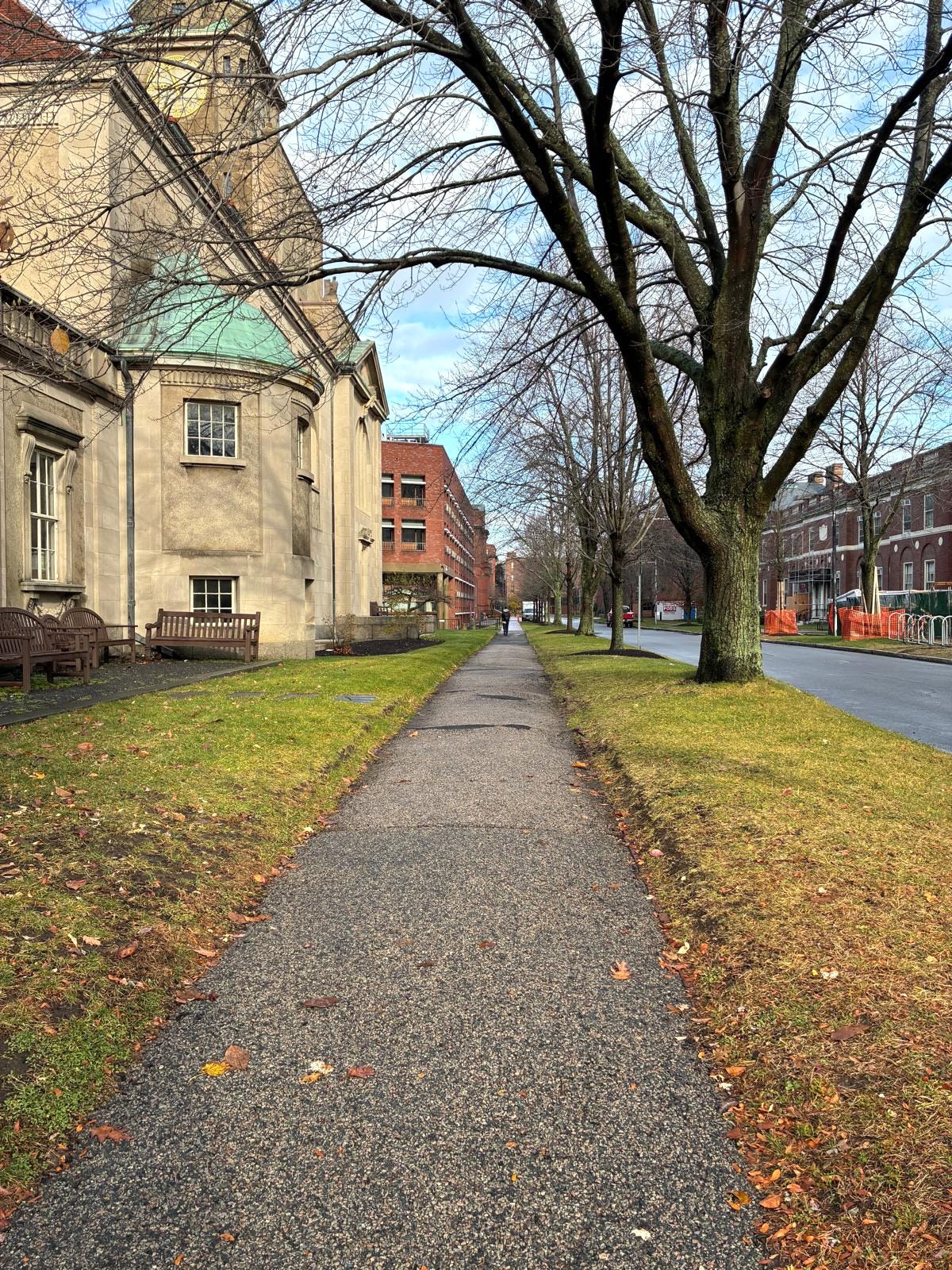
On the left, there’s Adolphus Busch Hall, which was completed in 1917, seven years after William James’s death. Today, it hosts the Minda de Gunzburg Center for European Studies.
If you stand at the intersection of Divinity Avenue and Kirkland Street, looking toward Oxford, this is what you see, with Memorial Hall and its High Victorian Gothic tower on the left. Henry James, William’s older brother, writes in The Bostonians that Memorial Hall, “consecrated to the sons of the university who fell in the long Civil War… seems a kind of temple to youth, manhood, generosity.” Given the paucity of good architecture nearby, it is a pleasant sight.
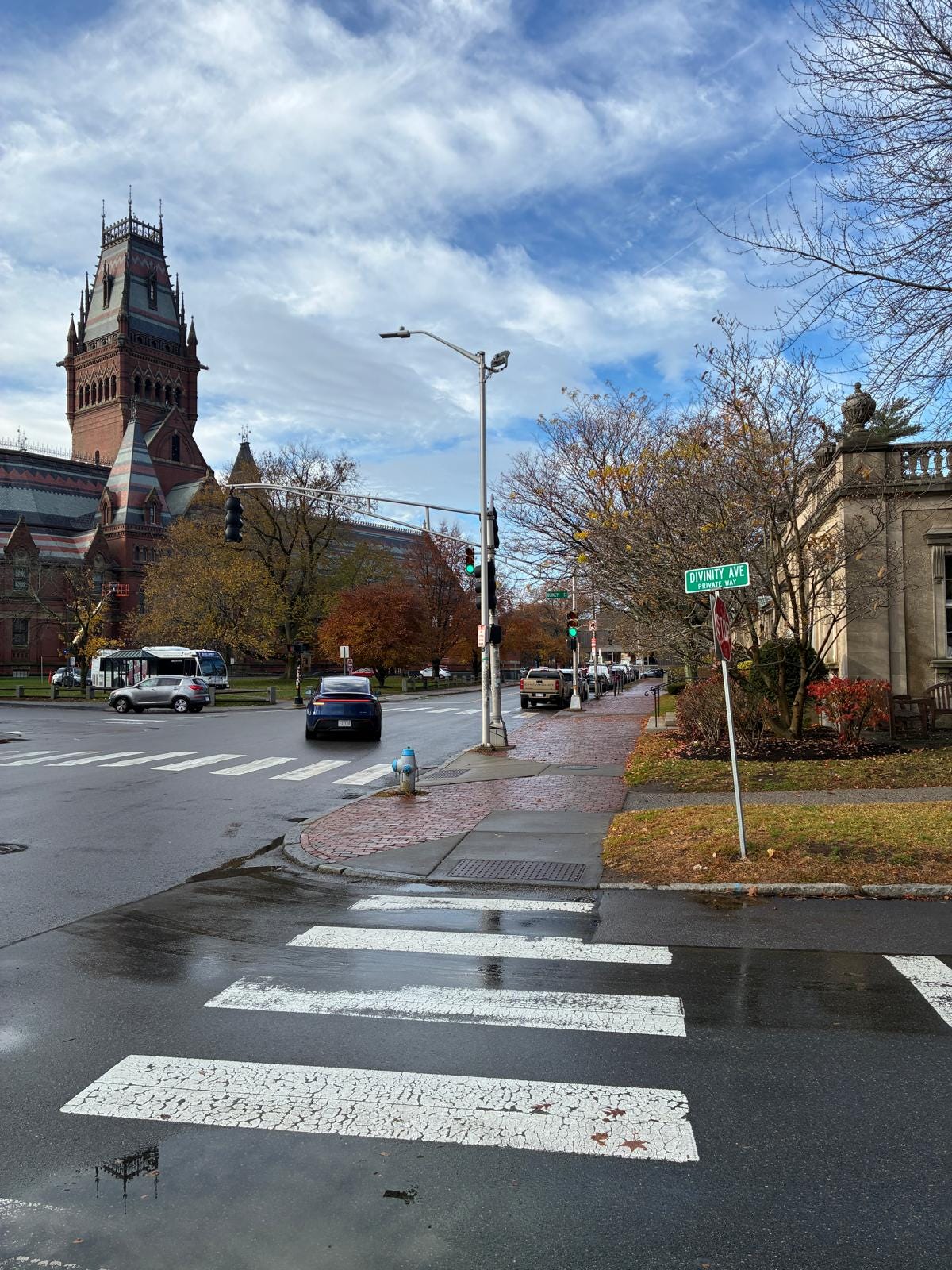
But the two roads of our story—Oxford and Divinity—do not meet. What could have James meant in his thought experiment?
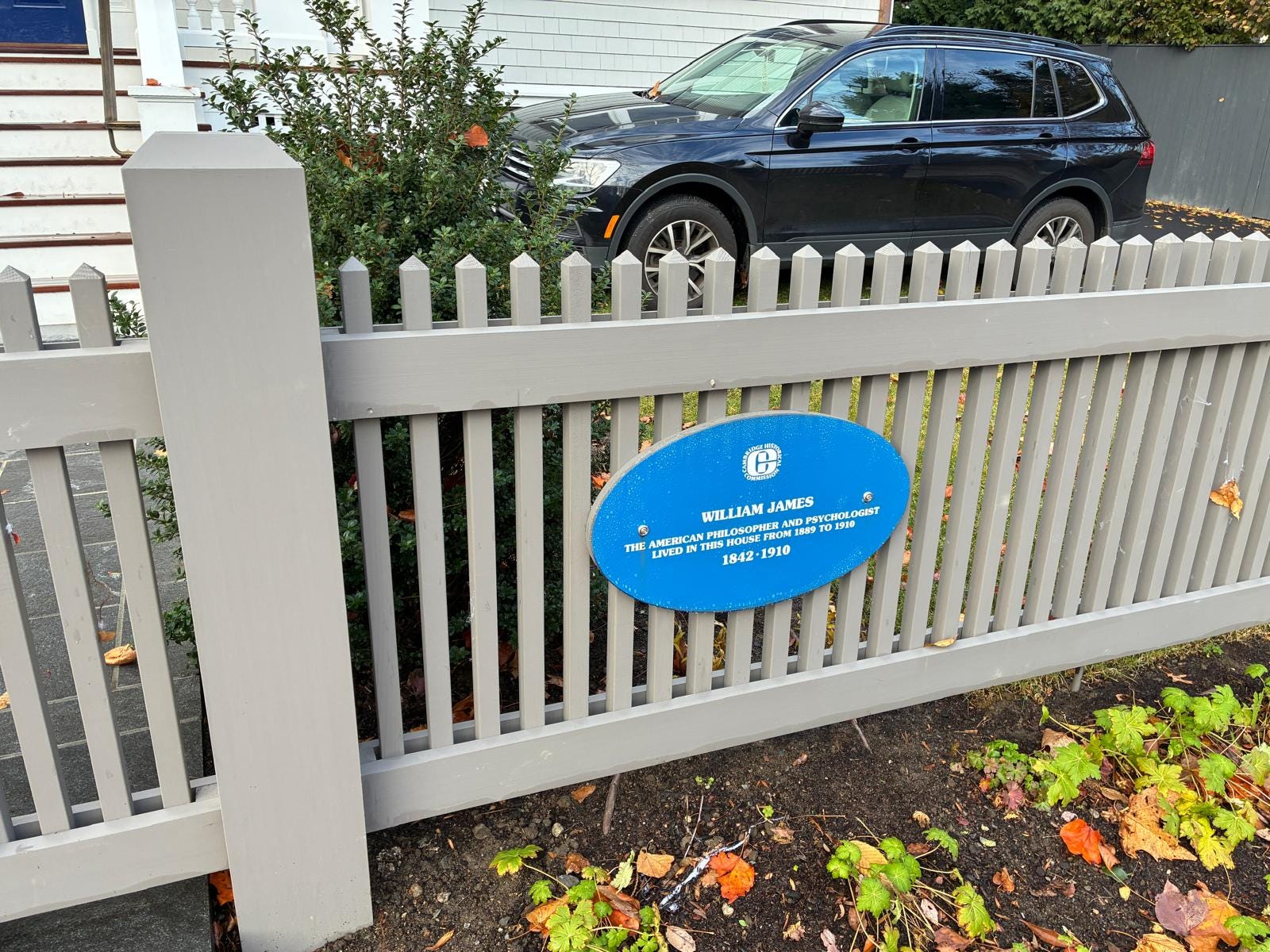
His house, marked by a blue plaque of the Cambridge Historical Commission, was on Irving Street, another side street off Kirkland, a few blocks farther down. Where could he have possibly stood that night so that Oxford and Divinity appeared as two branching possibilities, two ambiguous and possible futures? Something is amiss.
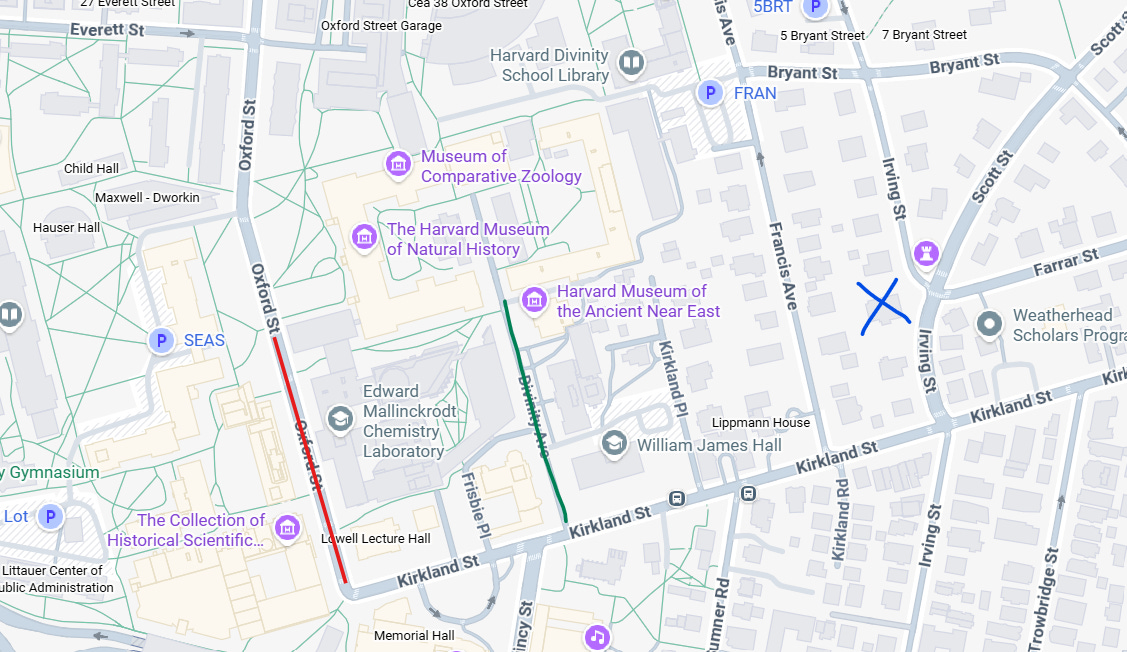
A map of the neighborhood in November 2025, from Google Maps. Oxford Street is marked in red; Divinity Avenue in green; William James’s house with a blue X.
Where Did James Give His Lecture?
The Dilemma of Determinism was first published in September 1884. We learn from a footnote on the first page that it is the text of a lecture given by James the previous March “to the Harvard Divinity School.” A book chapter by John Martin Fischer, a philosopher writing on free will and responsibility, notes that the lecture was given “in Lowell Lecture Hall.” (John Martin Fischer, Indeterminism and Control: An Approach to the Problem of Luck, in Law and Neuroscience, vol. 13, p. 41).
It is not clear where Fischer found this information. Neither the original version of the lecture, published in the Unitarian Review, nor the revised version published a few years later in The Will to Believe mention Lowell Lecture Hall. But it is a promising clue.
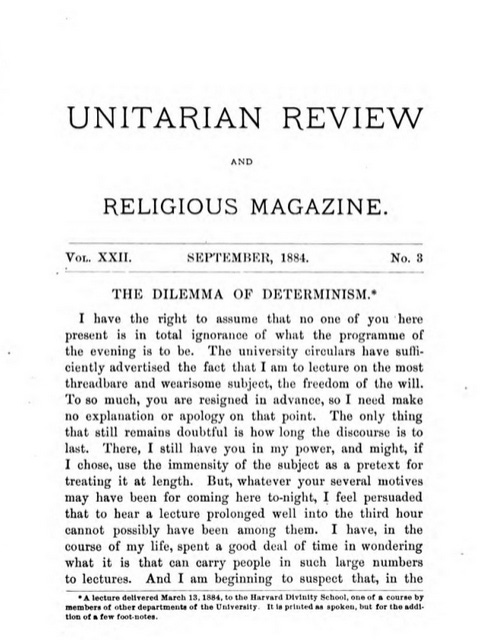
The problem is that James could not have lectured in Lowell Lecture Hall in 1884. The building was completed in 1902. I needed some old Cambridge maps to see what the area looked like when James proposed his thought experiment.
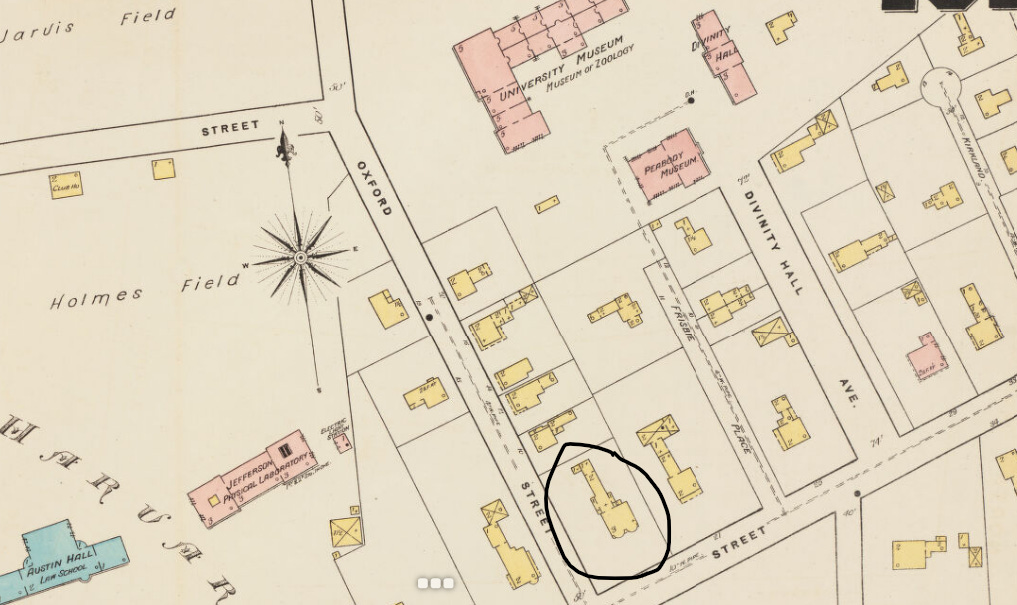
I found two. One is the Sanborn Fire Insurance Maps 1885-88, a detailed block-by-block map made for fire insurers. The map does show a large building at the corner of Oxford and Kirkland, where Lowell Lecture Hall stands today. Is it possible that there was already a lecture hall on that corner, later ebuilt and named after Lowell?
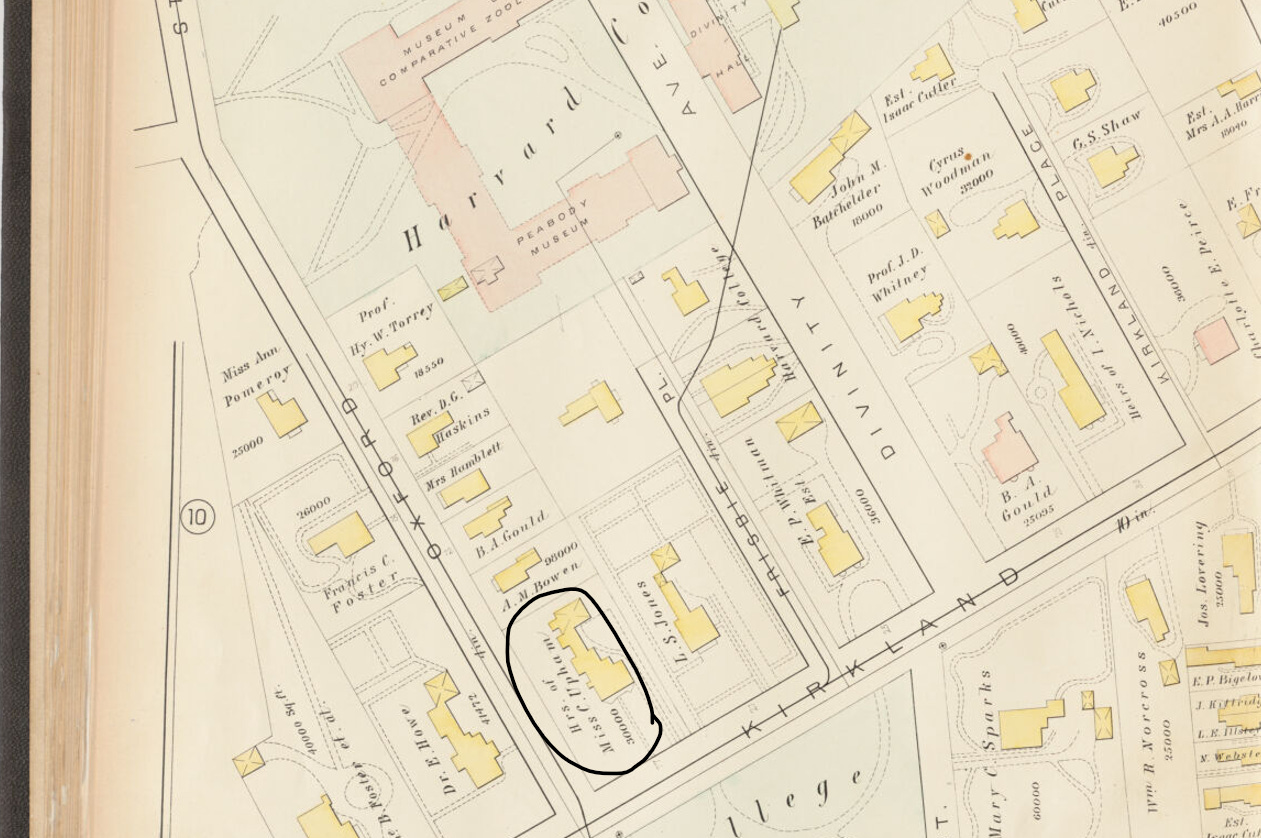
The other map is the Hopkins Atlas (1884), which answers the question. The Hopkins maps report the owner of each lot, and the building at the corner of Oxford and Kirkland was owned by a Miss C. Upham. Not a lecture hall, then.
In fact, Miss Upham ran a boardinghouse for students, scholars, and visitors. According to Alexander Theroux (Henry James’s Boston, 20 Iowa Review 158 (1990)), William James lived in Miss Upham’s boardinghouse while he was studying medicine at Harvard, in the 1860s.
So, there is a connection between James and that corner of Cambridge, but it is not the connection we are looking for.
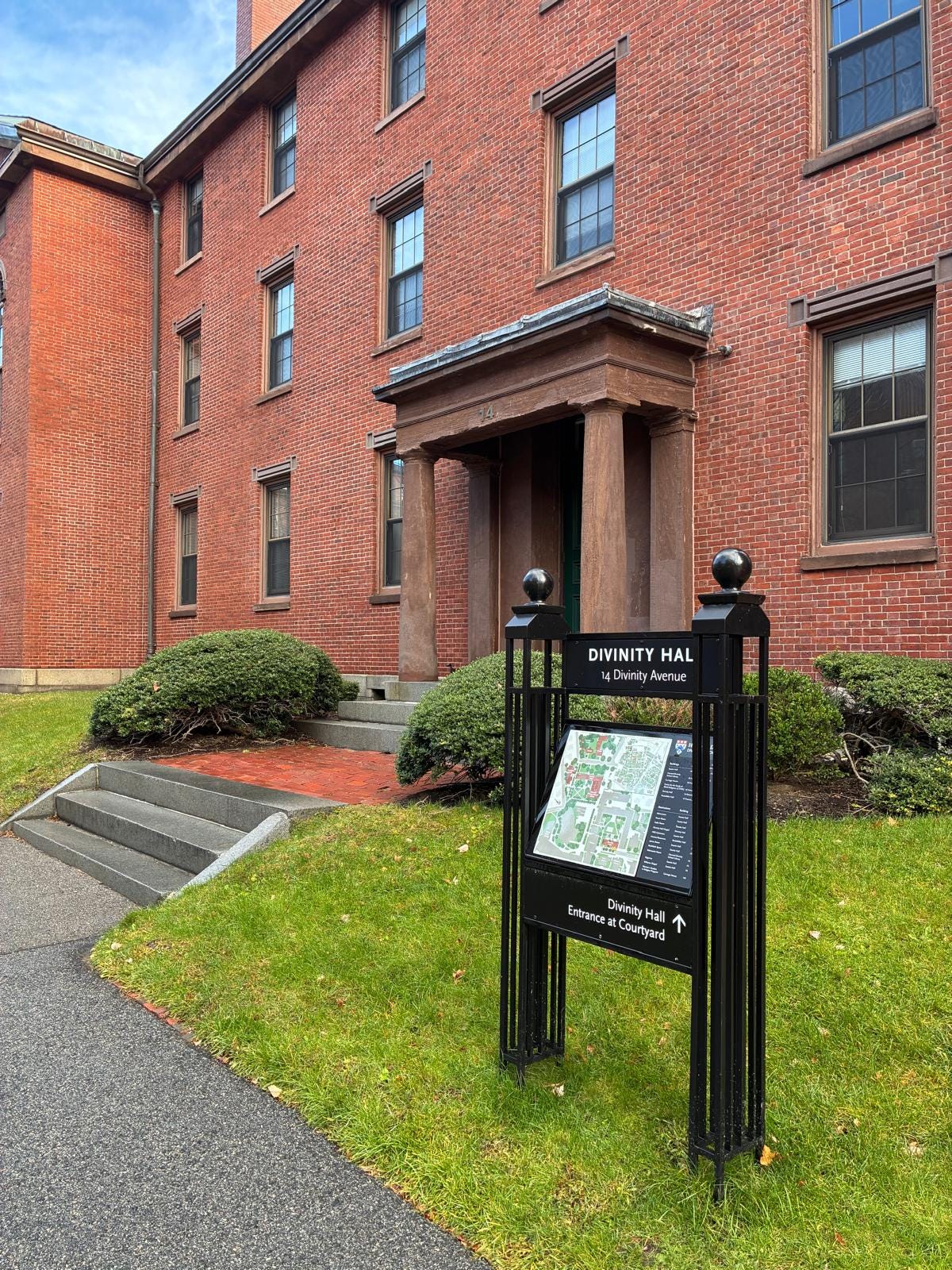
If James did not give his lecture there, where did he give it? The most plausible option is one of the buildings used by the Harvard Divinity School. Luckily, in 1884 there was only one: Divinity Hall.
Another option is the house of one of the Divinity School’s faculty members. Back then, Harvard was a small institution, with fewer than 2,000 students and a few dozen professors. In 1884, according to the official catalog, the Divinity School had twenty enrolled students and six recent graduates who were still around. It had only seven faculty members (the law school had five).
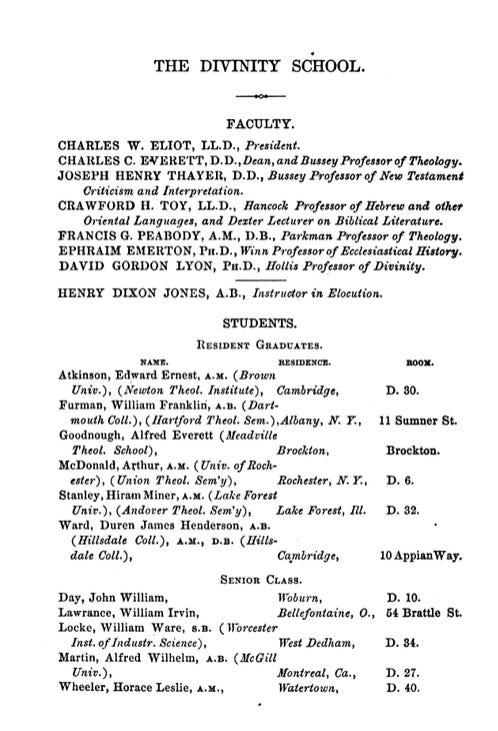
So it’s possible that the lecture happened at the house of one of the professors. But even if James was still an assistant professor in 1884, and had not achieved the stature we associate with him today, he was already a respected scholar, someone who probably deserved a proper lecture hall for his talk. Moreover, the Hopkins Atlas lists none of the 1884 faculty members as owners of houses in the area between Oxford and Divinity. The most obvious hypothesis is that James gave his lecture in Divinity Hall.
William James’s House
But the puzzle remains. Divinity Hall is on Divinity Avenue. One can take Oxford Street by walking down an alley that cuts through the Museum of Natural History. But why would James do such a thing? His house on Irving Street was in the opposite direction.
Unless—here’s the obvious thought that hadn’t occurred to me yet—James did not live on Irving Street in 1884.
A second look at the plaque confirms it: James lived there from 1889 to his death in 1910. In 1884, he must have lived somewhere else.
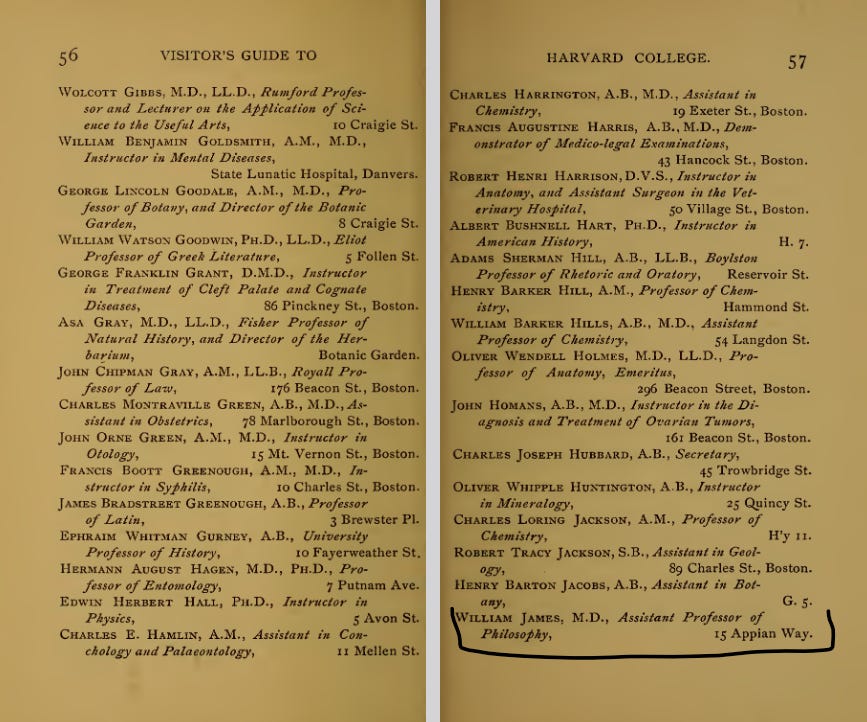
It turns out that a traveler visiting Cambridge in 1885 could buy a Visitor’s Guide to Harvard University and learn not only the location and brief history of Harvard Hall, Massachusetts Hall, and the statue of John Harvard, but also the home address of each and every Harvard professor. And according to this guide, William James, M.D., Assistant Professor of Philosophy, lived at 15 Appian Way, which is near Cambridge Common, half a mile southwest of Divinity Hall.
The Free Will Intersection
Now James’s thought experiment makes sense geographically. Coming out of Divinity Hall, he would first reach the corner of Oxford and Kirkland (right outside Miss Upham’s boardinghouse) before crossing Harvard Yard and then the Common. He could get there either by walking past the Museum of Natural History and then down Oxford Street, or by taking Divinity Avenue and then heading up Kirkland for a few blocks. He had a choice. The future was ambiguous.
This morning I stood exactly where that choice has to be made. The corner in question has nothing special about it. No solemn or noble effect, no special sentiment of beauty. In front of me was an ugly brown-red building, with two trucks parked on one side. The passage to the museum and Oxford Street was lined with trash bins.
Someone had drawn two arrows in chalk. One pointed to Divinity Avenue, the other toward Oxford Street. I’d like to think these chalk marks are a monument to Jamesian free will, but they are probably signs made by technicians to mark gas or water lines for some construction work.
I stood there for a few moments. The future looked ambiguous, no doubt about it. But was it for real? I chose one way and went about my business.